Sasquatch in Pop Culture: How Bigfoot Became a Modern Icon
From a shadowy figure in ancient folklore to a full-blown superstar, Bigfoot has taken an incredible journey through the landscape of popular culture. This elusive, ape-like creature has stomped its way out of the forest and onto our movie screens, television shows, and, yes, even our T-shirts. What is it about this cryptid that has so thoroughly captured the public imagination? How did a mysterious beast of the wilderness become a beloved, and sometimes feared, cultural icon?
The transformation of Bigfoot from a regional legend to a national obsession can be traced back to the media frenzy of the late 1950s and 60s. The term “Bigfoot” itself was coined by the press, and the publication of large, mysterious footprints found in California set the stage. However, it was the 1967 Patterson-Gimlin film that truly launched Sasquatch into the stratosphere. This short, shaky clip became the defining image of the creature, endlessly replayed, analyzed, and parodied. It gave a face—or at least a silhouette—to the legend, making Bigfoot instantly recognizable to millions.
Hollywood was quick to capitalize on this newfound fame. The 1970s saw a boom in Bigfoot-themed movies, often portraying the creature as a misunderstood gentle giant or a terrifying monster of the woods. Films like “The Legend of Boggy Creek” (1972), a docudrama about a similar creature in Arkansas, and “Sasquatch: The Legend of Bigfoot” (1976) brought the thrill of the hunt to a mainstream audience. Perhaps the most famous and family-friendly portrayal came in 1987 with “Harry and the Hendersons,” which depicted Bigfoot as a lovable, goofy member of the family, solidifying a more approachable and commercial image of the creature.
Television also played a massive role in cementing Bigfoot’s iconic status. Shows like “In Search of…” and “Unsolved Mysteries” dedicated entire episodes to the phenomenon, presenting eyewitness accounts and expert analysis that lent an air of credibility to the search. In recent years, reality shows like “Finding Bigfoot” have become immensely popular, showcasing the dedicated community of researchers and turning the quest for Sasquatch into a weekly adventure for viewers. Through these shows, Bigfoot became more than just a monster; he became the protagonist in an ongoing mystery narrative.
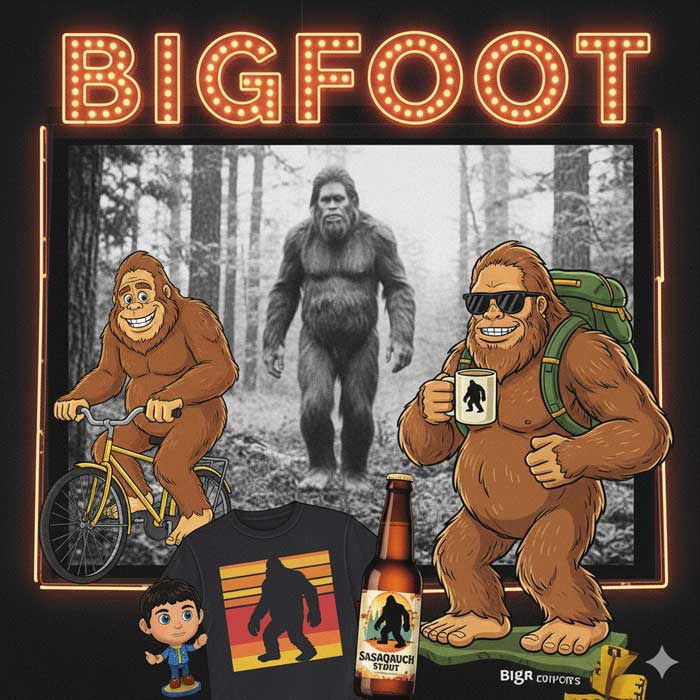
Beyond film and television, Bigfoot has become a branding powerhouse. His distinctive silhouette is one of the most recognizable outlines in North American culture, second only to perhaps the bald eagle or the Hollywood sign. It adorns everything from coffee mugs and keychains to beef jerky and beer labels. This widespread commercialization speaks to Bigfoot’s broad appeal. He can be mysterious and intimidating, but he can also be quirky and humorous. This versatility allows him to be marketed in countless ways.
And, of course, there are the T-shirts. The Bigfoot-themed T-shirt is a staple of gift shops, tourist traps, and online stores across the continent. It’s a way for people to signal their interest in the mystery, their love for the outdoors, or simply their appreciation for a good pop culture reference. Wearing a Bigfoot shirt is like being in on a secret club. It says, “I’m a believer,” or at least, “I’m intrigued.” The designs range from serious and artistic depictions to hilarious cartoons of Sasquatch engaging in human activities, like hiking, camping, or even riding a skateboard.
The journey of Bigfoot from a whispered legend to a pop culture icon is a testament to the power of a good story. He represents the wild, the unknown, and the tantalizing possibility that our world is more mysterious than we think. Whether he’s a terrifying beast on the silver screen or a friendly face on a T-shirt, Sasquatch has left an indelible footprint on our collective imagination, ensuring that we’ll be talking about, and looking for, him for years to come.